How to Pick T-Shirt Colours That Actually Suit Your Skin Tone
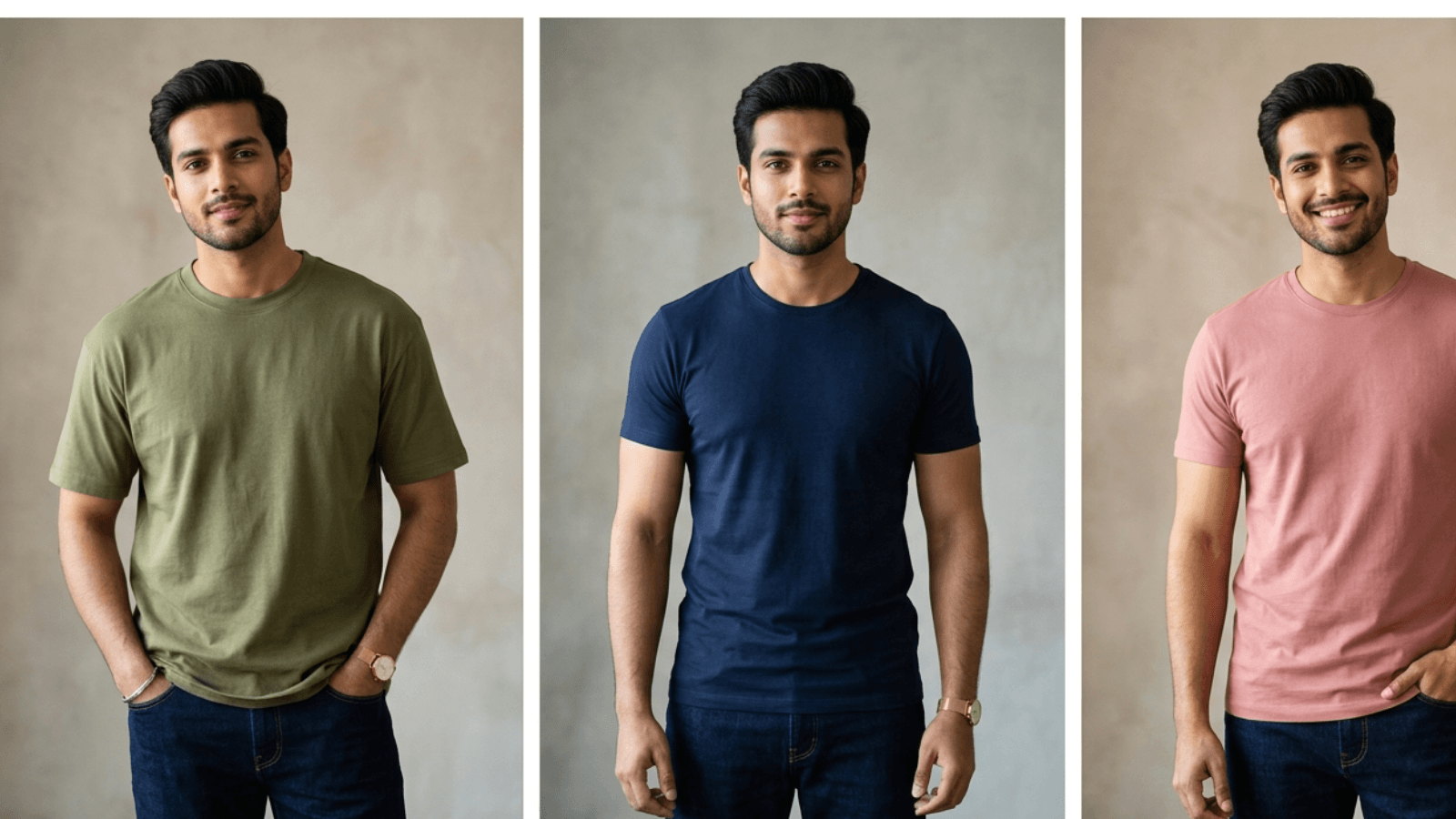
Most men shopping for t-shirts online spend far more time comparing neckline styles, fabric weight, and fit than they do thinking about colour, yet colour is often the one thing that decides whether an outfit looks put together or slightly off. A round neck tee in the wrong shade can make a fresh haircut look tired, while the same cut in the right shade turns an ordinary weekday outfit into something people actually notice. The good part is that picking flattering colours has very little to do with personal taste or trend cycles. It comes down to a simple bit of biology called skin undertone, and once a man knows his own, shopping gets noticeably faster and less trial and error.
Skin Tone and Undertone Are Not the Same Thing
Skin tone is what most people think about first, meaning how light or deep a complexion is. Undertone is different. It is the subtle colour sitting beneath the surface of the skin that stays fairly constant regardless of how tanned or pale someone gets across the year. Two men with an almost identical skin tone can carry very different undertones, which is usually why a shade looks great on one friend and slightly flat on another even though their complexions look close at first glance.
There are three broad undertone families that matter for clothing choices, warm, cool, and neutral. Warm undertones carry a yellow, golden, or peachy cast underneath the skin. Cool undertones lean pink, red, or blue. Neutral sits between the two and tends to be the most forgiving when it comes to colour choices.
Finding Your Undertone in Under a Minute
No stylist or colour consultant is needed for this. A few quick home checks give a fairly reliable answer in under a minute, and they work just as well standing in front of a wardrobe as they do at a makeup counter.
|
Test |
What It Tells You |
|---|---|
|
Vein Test |
Blue or purple veins on the inner wrist point to a cool undertone, greenish veins point to warm, and a mix of both usually means neutral |
|
Jewellery Test |
Gold jewellery looking richer against the skin suggests a warm undertone, while silver looking cleaner points to cool |
|
White Cloth Test |
Hold a plain white tee under the chin in daylight, a golden cast on the face points to warm, a pink or blue cast points to cool |
This kind of quick check is a common starting point in most undertone and colour matching guides, and it works just as well for picking out a t-shirt as it does for foundation shade matching, according to Healthline's breakdown of skin undertones.
Best Colours if You Have a Warm Undertone
Warm undertones look most natural in shades that echo the same golden base already present in the skin. Olive green, mustard, rust, warm reds, and camel brown sit close to the natural undertone rather than fighting it, which is why they tend to look effortless rather than deliberately styled. A plain mustard or olive round neck tee is a solid place to start testing this, and it pairs cleanly with denim or chinos without needing much else in the outfit.
Best Colours if You Have a Cool Undertone
Cool undertones do better in colours that carry a blue or grey base rather than a golden one. Navy, charcoal, true white, and jewel tones like emerald or sapphire tend to make cool skin look brighter rather than washed out. A crisp navy or charcoal polo will usually read cleaner and more intentional on cool skin than the same shirt in a warm rust shade would.
Best Colours if You Have a Neutral Undertone
Neutral undertones have the easiest job here since most colours sit comfortably on the skin without clashing. That said, pushing too far in either direction, meaning very warm mustard on one end or very icy pastel blue on the other, can still look slightly off. Mid tones like teal, dusty rose, soft grey, and muted green tend to be the safest and most versatile picks, and they work across round neck, oversized, and polo cuts equally well.
A Quick Colour Matcher
|
Undertone |
Colours That Work Well |
Colours to Approach Carefully |
|---|---|---|
|
Warm |
Olive, mustard, rust, camel, warm red |
Icy pastels, stark white, cool grey |
|
Cool |
Navy, charcoal, true white, jewel tones |
Mustard, orange, warm brown |
|
Neutral |
Teal, dusty rose, soft grey, muted green |
Very saturated neon shades |
Does Your Undertone Change When You Tan?
This is one of the more common mix ups. Skin tone shifts with sun exposure, but undertone generally stays the same underneath it. A man with a warm undertone who tans over summer is still working with the same golden base, just at a deeper depth, so the colour family that suited him in January still suits him in June. What does change is how vivid a colour reads against deeper skin, since richer tones tend to hold their own better against a tan while very pale pastels can look washed out by comparison.
Common Mistakes Men Make When Matching Colours
The most frequent one is treating black and white as universally safe basics. Stark white tends to favour cool undertones and can look slightly flat against warm skin, while true black works well across most undertones but pure white does not always. The second common mistake is buying a colour purely because it trended online without checking whether it belongs to the right undertone family, which usually ends with a shirt that gets worn once and then sits at the back of the wardrobe. The third is ignoring fabric finish. A lawa wash tee in a mid tone looks noticeably softer and more broken in than the same shade in a plain flat finish, which is worth factoring in when choosing between two nearly identical colours.
Building a Two or Three Colour Base You Can Layer
Once the undertone is confirmed, it helps to build a small rotation of two or three core colours rather than buying single shirts at random. Someone with a warm undertone might settle on olive, rust, and camel as a base, then layer a hoodie or joggers from the same family on cooler days so the whole outfit reads intentional rather than mismatched. Cool undertones can do the same with navy, charcoal, and white, mixing a plain tee under a darker hoodie for a cleaner monochrome look. Prints and tie dye pieces are also a low risk way to test a wider colour range without committing to one solid shade, since the mix of tones in a single print usually includes something from the right undertone family regardless of which one it turns out to be.
Shopping Online Without Getting the Colour Wrong
Product photography under studio lighting can shift a colour warmer or cooler than it appears in daylight, so it helps to check listing photos across more than one angle when the page offers them, and to read the fabric description alongside the swatch rather than relying on the thumbnail alone. Phone screens also tend to boost saturation slightly, so a shade that looks vivid while scrolling may arrive a touch more muted in person, which is worth keeping in mind before assuming a listing photo is off.
What About Skin Depth, Not Just Undertone
Undertone decides which colour family suits a person, but skin depth, meaning how light or dark the complexion is, decides how strong or muted a shade within that family should be. A man with a warm undertone and a fair complexion usually looks better in a lighter camel or soft mustard rather than a very deep rust, since a heavy dark shade can overwhelm lighter skin. A man with a warm undertone and a deeper complexion can usually carry that same deep rust or chocolate brown without it looking flat, and can also handle brighter, more saturated colours that would look loud on fairer skin. The same logic applies to cool undertones, where a fair cool complexion tends to suit soft navy or dove grey, while a deeper cool complexion can carry a much richer sapphire or true black without losing definition.
Choosing Between Two Similar Shades
It is common to be stuck between two versions of what looks like the same colour online, for example two different olive tees or two different navy polos. In that situation, undertone breaks the tie faster than staring at product photos. A warm undertone should lean toward the version with more yellow or brown in the mix, while a cool undertone should lean toward the version with more grey or blue in the mix. Reading the fabric composition also helps here, since a cotton blend with a slight sheen reflects light differently to a matte cotton, which can make an identical dye lot look a shade warmer or cooler depending on the finish.
Getting the undertone right once means every future t-shirt purchase gets faster and more predictable, whether it is a plain round neck for daily wear or something more considered like a printed shirt for a weekend out. It is a five minute check at home that keeps paying off every time something new gets added to the wardrobe.