How to Care for Your Cotton T-Shirts to Make Them Last Longer
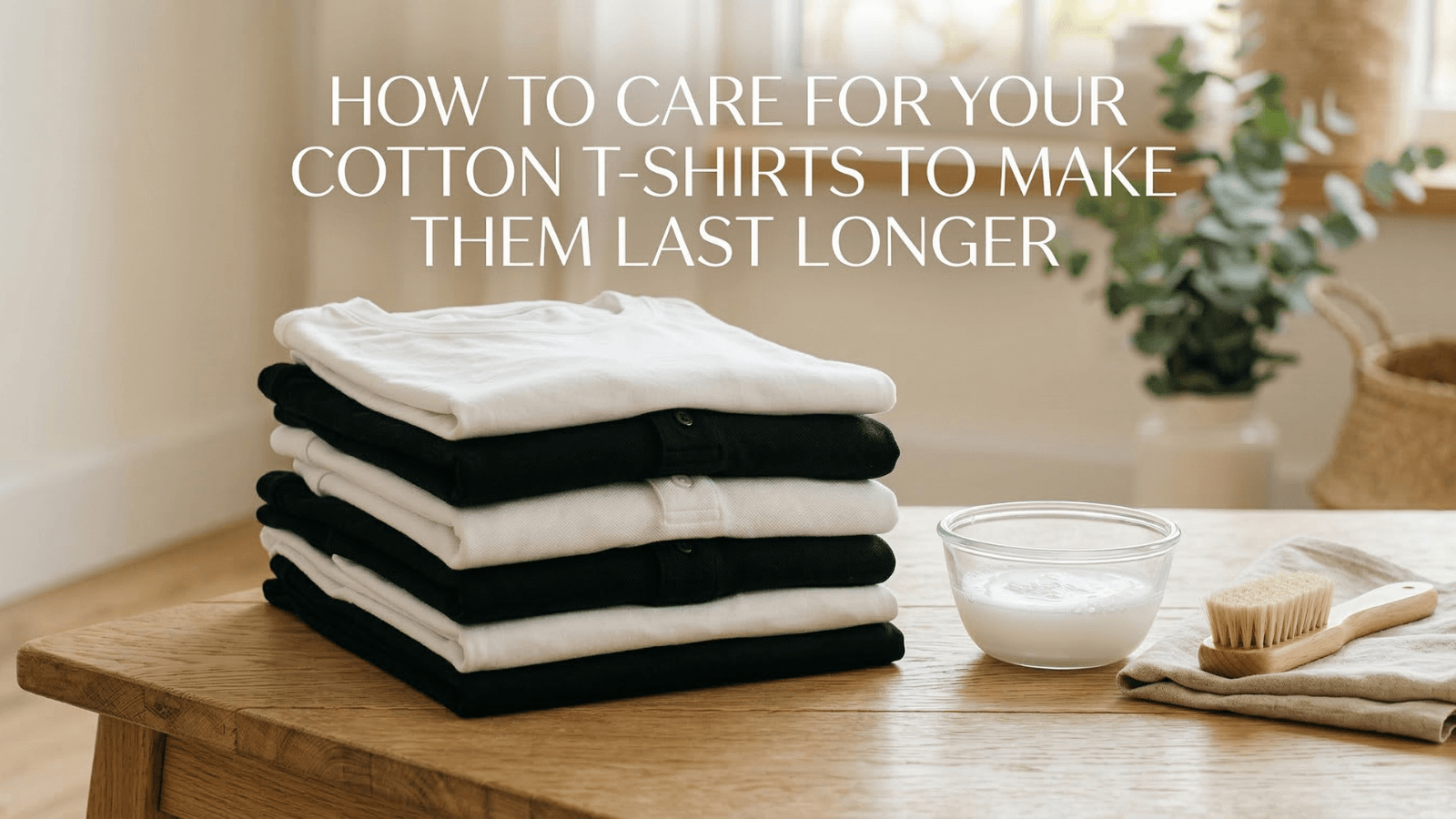
A good cotton t-shirt is one of the most dependable things you can own. Whether it is a round neck t-shirt you reach for every other day or a polo t-shirt you wear on your smarter casual days, the way you wash, dry, and store it determines how long it stays wearable. Most cotton t-shirts do not wear out from use. They wear out from improper care.
Cotton is a natural fibre that responds strongly to heat, chemicals, and mechanical stress. When you treat it right, it stays soft, holds its shape, and keeps its colour season after season. When you ignore the basics, even the best t-shirt will shrink, fade, and pill within a few months.
This guide covers everything you need to know about cotton t-shirt care in a practical, straightforward way, covering washing, drying, ironing, storage, and handling common problems like stains and yellowing.
Understanding What Cotton Actually Is
Before getting into the care routines, it helps to understand what you are working with. Cotton fibres are natural, which means they behave differently from synthetics like polyester. Cotton absorbs water easily, which is why it feels soft and breathable but also why it is vulnerable to shrinkage, colour loss, and mildew if handled incorrectly.
Most everyday t-shirts are made from combed cotton, ring-spun cotton, or a cotton-polyester blend. Each has slightly different care needs, though the fundamentals remain similar.
|
Cotton Type |
Key Trait |
Care Note |
|---|---|---|
|
Combed Cotton |
Softer, smoother surface |
Cold wash recommended |
|
Ring-Spun Cotton |
Durable, tighter weave |
Handles more washes well |
|
Cotton-Poly Blend |
Less shrinkage |
Avoid high heat |
Libis t-shirts, including the round neck collection, are crafted from carefully chosen cotton fabrics that prioritise both comfort and wash durability. That said, proper care at home makes all the difference in how long the fabric holds up.
Reading the Care Label: The Starting Point You Should Never Skip
The care label on your t-shirt is not decorative. It is a precise set of instructions from the manufacturer based on the specific fabric used. Before adopting any washing routine, read the label and understand what each symbol means.
|
Care Symbol |
What It Means |
|---|---|
|
30 degrees with wavy lines |
Machine wash, cool water only |
|
Circle with P inside |
Dry clean only |
|
Square with circle inside |
Tumble dry allowed |
|
Square with X over circle |
Do not tumble dry |
|
Iron with one dot |
Low heat iron only |
|
Triangle with X |
Do not bleach |
If the label says cold wash only, follow it. Washing at higher temperatures than recommended is one of the most common causes of cotton t-shirt shrinkage. If the label has worn off, a safe default for any cotton t-shirt is cold wash, gentle cycle, no bleach, air dry.
The Right Way to Wash Cotton T-Shirts
Sorting Before Washing
Never mix heavily soiled items with lightly worn ones. Never mix light-coloured t-shirts with dark or brightly coloured ones in the same load. Dark colours, especially new ones, bleed dye during the first few washes. A single wash load of mixed colours can permanently stain your white or light grey t-shirts.
Sort your laundry into at least three groups: whites, darks, and colours. This single habit protects your t-shirts more than any premium detergent can.
Choosing the Right Water Temperature
Cold water (around 20 to 30 degrees Celsius) is ideal for cotton t-shirts. It prevents shrinkage, protects colour, and is sufficient to remove sweat, light dirt, and everyday grime. Warm water is acceptable for white t-shirts that need a deeper clean, but it accelerates wear over time. Avoid hot water for any cotton garment unless the label specifically allows it.
Selecting the Right Detergent
Use a mild liquid detergent designed for cotton or delicate fabrics. Powder detergents can leave residue, especially on darker colours. Avoid detergents with bleaching agents or brighteners for coloured t-shirts, as these break down fabric dyes gradually.
For whites, an oxygen-based stain remover used occasionally is more effective and less damaging than chlorine bleach. Chlorine bleach weakens cotton fibres and creates a yellow tinge over time, which is the opposite of what most people expect.
Machine Wash Settings
- Use the gentle or delicate cycle for printed or embroidered t-shirts
- Normal cycle is fine for plain cotton t-shirts in good condition
- Do not overload the washing machine, clothes need space to move freely
- Turn t-shirts inside out before placing them in the machine
- Wash polo t-shirts with the collar turned up slightly to prevent collar distortion
Hand Washing When Needed
For graphic-print t-shirts, heavily embroidered designs, or garments you want to treat with extra care, hand washing is the better option. Use cool water and a small amount of mild detergent. Submerge the t-shirt, gently knead the fabric for two to three minutes, rinse thoroughly, and squeeze out excess water without wringing. Wringing twists the fabric and distorts the shape.
Drying Cotton T-Shirts Without Damaging Them
Air Drying vs Tumble Drying
Air drying is always the safer choice for cotton. Hang t-shirts on a clothesline or drying rack in a well-ventilated area out of direct sunlight. Direct sunlight bleaches colours over time and can cause fabrics to become stiff and brittle.
If you use a tumble dryer, use the lowest heat setting and remove t-shirts while they are still slightly damp. Over-drying is the leading cause of cotton shrinkage in the dryer. The heat causes cotton fibres to contract, and once a t-shirt has shrunk, there is very little you can do to fully restore its original size.
|
Drying Method |
Best For |
|---|---|
|
Air dry in shade |
All cotton t-shirts, especially coloured ones |
|
Flat drying on mesh |
Heavy knit or oversized fits to prevent stretching |
|
Low-heat tumble dry |
When time is short, remove while slightly damp |
|
Direct sunlight |
White t-shirts only, avoid for printed/coloured ones |
Hanging vs Flat Drying
Lighter t-shirts, such as the polo t-shirts and standard round necks, dry well on hangers. However, avoid hanging very wet t-shirts by the shoulders alone, as the weight of the water can stretch the shoulder seams. Either lay the t-shirt flat on a drying rack or use a wide, padded hanger to distribute the weight evenly.
Ironing Cotton T-Shirts the Right Way
Cotton wrinkles easily. Ironing restores the clean look, but the wrong approach can damage printed designs or leave burn marks on the fabric.
- Iron t-shirts when they are still slightly damp for easier results
- Turn printed t-shirts inside out before ironing to protect the graphic
- Use a pressing cloth between the iron and the fabric for delicate areas
- Set the iron to the cotton or medium setting based on label instructions
- Never iron over zips, buttons, or embellishments directly
- For polo t-shirts, iron the collar first, then the sleeves, then the body
Steam ironing is gentler than dry ironing and works well for removing stubborn creases without applying too much direct heat to one area.
Storing Cotton T-Shirts Correctly
How you store your t-shirts affects their shape and the longevity of the fabric, particularly around the collar and shoulder areas.
Folding vs Hanging
For everyday t-shirts, folding and stacking them in a drawer is usually better than hanging. Hanging cotton t-shirts for long periods can stretch the collar and shoulder seams due to gravity. If you prefer hanging, use wide, curved hangers that support the shoulder shape.
Heavier items like hoodies and joggers should always be folded and stored flat to prevent them from losing their shape on a hanger.
Storage Environment
- Store in a cool, dry place with good ventilation
- Avoid damp areas like bathroom shelves or low-ground storage boxes near drainage
- Do not store t-shirts in airtight plastic bags for extended periods as moisture buildup causes mildew
- Use cedar blocks or lavender sachets instead of chemical mothballs to keep insects away
- Fold along seams rather than across the chest to reduce pressure on printed areas
Handling Stains on Cotton T-Shirts
Cotton absorbs stains quickly, which makes it important to treat them as soon as they happen. Leaving a stain to dry and then machine washing often sets it permanently.
|
Stain Type |
First Response |
Avoid |
|---|---|---|
|
Sweat/Deodorant |
Cold water rinse, mild soap |
Hot water, bleach |
|
Food oil |
Dab with dish soap, let sit 10 mins |
Rubbing hard into fabric |
|
Ink |
Isopropyl alcohol on a cloth, dab gently |
Water first |
|
Coffee/Tea |
Cold water flush immediately |
Warm water |
|
Mud |
Let dry, then brush off and wash cold |
Wet scrubbing fresh mud |
Always test any stain remover on an inconspicuous area first, especially on coloured or printed fabric. Some solvent-based removers can strip dye or damage prints if applied directly to the front of the garment.
Common Mistakes That Shorten T-Shirt Life
Washing too frequently: Cotton does not need to be washed after every single wear unless you were sweating heavily or the shirt got visibly dirty. Over-washing accelerates colour fade and fibre breakdown. Airing out a lightly worn t-shirt and re-wearing it once before washing is a reasonable practice.
Using too much detergent: Excess detergent is not rinsed out fully and stays trapped in the fibres, causing stiffness, skin irritation, and a dull appearance over time. Follow the measurement guide on the detergent label.
Leaving wet t-shirts in the machine: Forgetting wet clothes in the washer creates mildew and a persistent musty smell that is very hard to remove. Take clothes out promptly after the cycle finishes.
Ironing over wet prints: A common mistake is ironing t-shirts with graphic prints while they are damp without turning them inside out. This can melt or crack the print, especially on plastisol or rubber-based designs.
Skipping the inside-out step: Washing t-shirts right-side-out exposes the outer face of the fabric to the most friction during the wash cycle. Turning it inside out takes two seconds and significantly extends the life of the colour on the outer surface.
|
What to Avoid |
Why It Damages Cotton |
|---|---|
|
Hot water wash |
Causes fibre contraction and shrinkage |
|
Chlorine bleach |
Weakens fibres, causes yellowing |
|
Overdrying in tumble dryer |
Locks in shrinkage, makes fabric rough |
|
Direct sunlight drying |
Bleaches colour, stiffens fabric |
|
Leaving wet in machine |
Causes mildew and permanent odour |
The Yellowing Problem: Why It Happens and How to Fix It
White and light-coloured cotton t-shirts tend to yellow around the collar, underarms, and cuffs over time. This is not a sign of low-quality fabric. It is a reaction between sweat compounds, deodorant residue, and the washing process itself.
Prevention
- Allow deodorant to dry fully before putting on a white t-shirt
- Rinse the collar and underarm area with cold water before putting the shirt in the wash
- Avoid using fabric softener on white t-shirts as it creates a coating that traps sweat residue
- Wash whites in a dedicated load rather than with light colours
Fixing Yellowed T-Shirts
A mix of white vinegar and water as a pre-soak is an effective and gentle way to lift yellowing from cotton. Soak the affected areas for 30 minutes before washing as normal. Oxygen-based whiteners like sodium percarbonate are a stronger option for stubborn yellowing and are safe for cotton when used as directed.
For reference on how fabric treatments work on different cotton types, the team at Good Housekeeping regularly publishes fabric care studies worth reading: https://www.goodhousekeeping.com/home/cleaning/
When to Retire a T-Shirt
Even with excellent care, cotton t-shirts have a natural lifespan. Knowing when to retire one saves you the frustration of wearing a garment that no longer represents you well.
- Collar permanently stretched and no longer holds its shape
- Fabric has thinned to the point of near-transparency around high-friction areas
- Pilling is heavy and covers large sections of the front or back
- Odour persists even after thorough washing
- Print or embroidery has cracked and is peeling significantly
At this point, it is worth replacing rather than continuing to wash a garment that has passed its useful life. Libis offers a range of everyday round neck t-shirts and polo t-shirts built for durability and everyday comfort, making it easy to refresh your wardrobe without breaking the bank.
Care Differences: Round Neck T-Shirt vs Polo T-Shirt
While the general rules apply to both, there are a few important differences in how you should care for a polo t-shirt compared to a plain round neck.
|
Care Aspect |
Round Neck T-Shirt |
Polo T-Shirt |
|---|---|---|
|
Collar care |
No special attention needed |
Iron and shape collar separately |
|
Button area |
Not applicable |
Unfasten buttons before washing |
|
Wash cycle |
Normal or gentle |
Gentle cycle preferred |
|
Drying method |
Hang or lay flat |
Lay flat to keep collar shape |
|
Ironing order |
Body then sleeves |
Collar first, then body |
Polo shirts have a collar structure that benefits from flat drying on a dedicated drying rack. The rib-knit collar of a polo can distort if it is hung while heavily wet. You can browse the full polo t-shirt range to find options that suit your regular wear and follow the care tips above to keep them looking sharp.
Fabric Softeners and Conditioners: Use with Caution
Fabric softeners coat cotton fibres with a thin layer of conditioning chemicals. While this makes t-shirts feel softer immediately after washing, it reduces the fabric's natural breathability over time and can cause a buildup that makes the fibres less absorbent. For performance t-shirts or anything worn in warm conditions, avoiding fabric softener is actually the better choice.
White vinegar used as a rinse agent is a practical, chemical-free alternative. Add half a cup to the rinse cycle in place of fabric softener. It neutralises detergent residue, softens the fabric naturally, and does not leave any residue of its own. Your t-shirts will come out softer and there will be no vinegar smell once dry.
The Lawa Wash Technique: A Premium Care Alternative
For those who want to go a step further in garment care, Libis offers a specific wash technique called Lawa Wash. This is a premium fabric care approach that preserves the feel and structure of garments beyond what standard washing achieves. If you wear your t-shirts frequently and want to maintain their quality for longer, it is worth understanding how Lawa Wash differs from conventional methods.
The Lawa Wash product is designed specifically for the kind of cotton fabrics Libis uses, making it a natural complement to the t-shirts in the collection. It keeps fibres intact, maintains colour depth, and reduces the pilling that comes from repeated machine washing.
Building a Weekly T-Shirt Care Routine
Good care does not have to be time-consuming. A simple, consistent routine keeps your t-shirts in better condition than occasional deep cleaning attempts.
|
Routine Action |
Frequency |
|---|---|
|
Sort and wash similar colours together |
Every wash |
|
Turn inside out before washing |
Every wash |
|
Check for stains and treat immediately |
As needed |
|
Air dry away from direct sunlight |
Every wash |
|
Iron inside out for printed tees |
When needed |
|
Check collar shape on polo tees |
Monthly |
|
Declutter worn-out pieces |
Every season |
Spending five extra minutes on sorting and turning garments inside out before a wash can add months to the wearable life of a t-shirt. These small habits compound over time.
Whether you are managing a wardrobe full of round neck t-shirts, polo shirts, tank tops, or even shorts that you pair with your tees, applying the right care to each fabric type keeps the whole wardrobe looking better for longer.
For a broader perspective on textile care science and fabric performance testing, the American Association of Textile Chemists and Colorists (AATCC) publishes accessible resources at aatcc.org that can deepen your understanding of why these techniques work at a fibre level.