How Libis Selects Its Fabrics: From Cotton Fields to Your Wardrobe
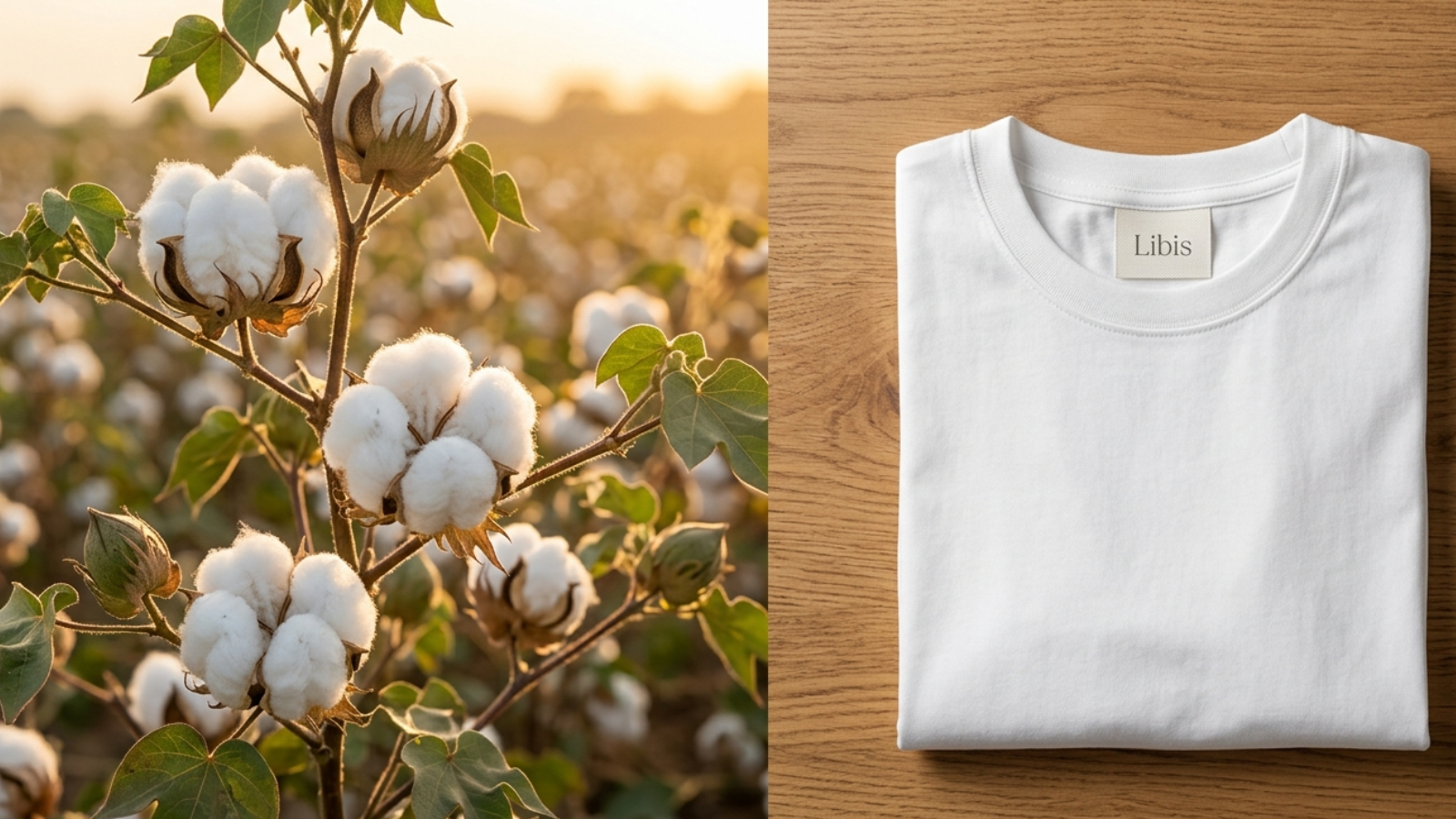
When you put on a Libis t-shirt for the first time, the feeling is immediately different from what most fast-fashion garments offer. That difference does not happen by accident. It begins months before a single garment is sewn, in the decisions made about where the cotton comes from, how the yarn is spun, and what standards the finished fabric must meet before it earns a place in the Libis range.
This is the story of how those decisions are made, and why they matter for every man who wears what we make.
Why Fabric Selection Is the Foundation of Every Good Garment
Most clothing brands define their identity through design. Libis defines it through material. The reasoning is straightforward: a well-cut garment made from a mediocre fabric will feel mediocre within a year. A simpler silhouette made from an honest, well-sourced cotton will get better with every wash and become a staple in the wardrobe without effort.
The fabric sourcing process at Libis is guided by three criteria applied at every stage: softness to the skin on first contact, dimensional stability after repeated washing, and breathability suited to the Indian climate. Any fabric that does not meet all three does not make it into production, regardless of price or availability.
Choosing Cotton That Performs, Not Just Cotton That Looks Good
Not all cotton is the same. Within Indian textile markets alone, there are dozens of cotton varieties grown across different states, each with different staple lengths, fibre fineness, and natural strength. Short-staple cotton, which dominates volume in mass-market manufacturing, feels rough against the skin and pills quickly. Long-staple and extra-long-staple cotton, such as Supima and comparable Indian varieties, produces a softer, more durable yarn because each fibre runs longer before it meets a join.
Libis sources primarily from long-staple cotton suppliers because the difference in wear experience is significant enough to justify the additional cost. When the fabric feels right after fifty washes, the original investment in a Libis piece makes more sense than it does when you hold it off the shelf.
For more on why cotton quality varies and what to look for, the Textile Exchange publishes an annual fibre sourcing benchmark that covers the material standards used across responsible fashion brands.
|
Cotton Type |
Fibre Length |
Typical Feel |
|
Short-staple (standard) |
Short |
Rougher, pills faster |
|
Long-staple (combed) |
Long |
Softer, holds shape better |
|
Extra-long-staple (Supima) |
Extra long |
Premium softness, very durable |
The Spinning and Knitting Stage
Once the right cotton is sourced, the next decision that shapes the final garment is how the yarn is constructed. Libis uses combed and ring-spun yarn for its core t-shirt range. Combing removes the shorter, weaker fibres before spinning, which reduces pilling and creates a more uniform, smooth surface. Ring spinning, compared to open-end spinning methods that dominate cheaper production, creates a tighter, stronger yarn structure that holds together under repeated wear and washing.
The knit structure also determines how a finished t-shirt moves on the body. A jersey knit has the stretch-and-recover behaviour that makes a t-shirt feel natural rather than restrictive. Getting the GSM (grams per square metre) right is the final calibration. Too light and the fabric becomes transparent and insubstantial. Too heavy and it becomes stiff and uncomfortable in Indian summer conditions. The Libis range sits in the range that balances structure with lightness.
No Shortcuts in Finishing
Fabric finishing is where most cost-cutting happens in the garment industry, and also where quality is most commonly compromised. Common shortcuts include using chemical softeners to simulate the hand feel of a quality fabric, or applying a surface treatment that only lasts through the first few washes.
The finishing standards at Libis focus on pre-shrinking the fabric before cutting, so that the t-shirt you buy in size M stays a true M after washing. Colour fastness is tested so that the shades you choose do not fade disproportionately within the first season. Seam integrity is checked at the stitching stage so that stress points at the collar, sleeve join, and side seam remain clean over time.
You can explore the current collection and see how these material choices translate into the finished garment at www.libisclothing.com.
Sustainability in the Sourcing Chain
Sourcing fabric responsibly is not a separate goal from sourcing good fabric. The two are connected. Farms that use responsible growing practices tend to produce more consistent, higher-quality fibre because the soil and plant health are maintained over seasons rather than depleted for short-term yield.
Libis works with suppliers who can account for where their cotton is grown and how their dyeing and finishing processes handle water and chemical discharge. This is not a marketing position. It is a practical requirement for working with partners whose consistency can be relied upon season after season.
|
Standard |
What It Covers |
|
OEKO-TEX Standard 100 |
Tests for harmful substances in finished textiles |
|
BCI (Better Cotton Initiative) |
Responsible cotton farming practices |
The garments you find at Libis are not made to a price point. They are made to a standard that starts in the field and ends when the piece is ready to be worn, washed, and worn again for years.