Sweat-Wicking vs Regular Cotton: Which T-Shirt Fabric Wins for Active Days?
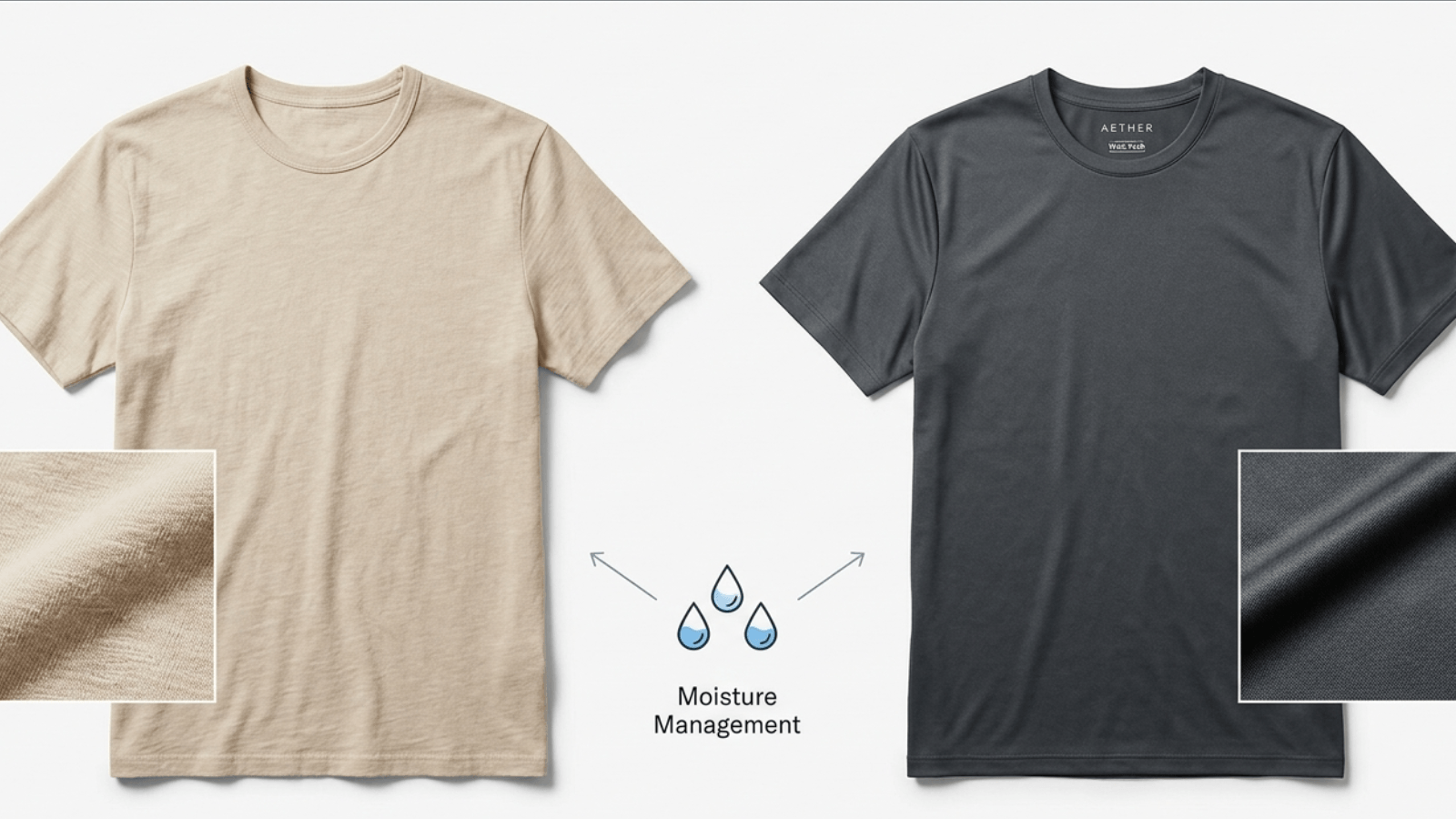
You already know that what you wear during a workout, a long commute, or a physically demanding day at work affects how you feel. The fabric sitting against your skin either helps your body manage heat and moisture or it works against you. That is the practical difference between sweat-wicking fabric and regular cotton, and it matters more than most people realise before they experience both.
This guide breaks down exactly how these two fabric types perform on active days, what their trade-offs are, and how to decide which belongs in your rotation. Whether you train regularly, spend time outdoors, or just want a t-shirt that holds up through a humid Indian summer, the choice of fabric is worth making deliberately. Browse performance and cotton t-shirts at Libis to see how different fabrics translate into everyday fits.
How Regular Cotton Actually Behaves When You Sweat
Cotton is one of the most loved fabrics in India for good reason. It is soft, breathable in dry conditions, widely available, and comfortable against skin. For casual wear in cool or air-conditioned environments, it is hard to beat.
The challenge with regular cotton shows up when your body temperature rises. Cotton fibres are highly absorbent. When you sweat, cotton soaks it up quickly. The problem is that it holds on to that moisture and is slow to release it. A cotton t-shirt that starts feeling comfortable can become heavy, clingy, and cold within twenty minutes of sustained activity.
In India's climate, where humidity is high for much of the year, this effect is amplified. Sweat does not evaporate easily from cotton in humid conditions because the air around you is already moisture-saturated. The result is a shirt that feels damp, sticks to your body, and takes a long time to dry even after you stop moving.
How Sweat-Wicking Fabric Works
Sweat-wicking fabrics, typically made from polyester microfibre blends or treated synthetic materials, are engineered to move moisture away from the skin rather than absorb it. The technical term for this is moisture transport. The fabric draws sweat from your skin surface to the outer face of the fabric, where it spreads over a larger surface area and evaporates more quickly.
The practical effect is that your skin stays drier during activity. You still sweat, but you feel less of it. The shirt remains lighter and does not cling. In humid conditions, wicking fabrics still perform better than cotton because the moisture is distributed and evaporated more efficiently across the fabric surface.
Many gym t-shirts for men at Libis are built around this moisture-management principle, using fabric constructions that balance wicking performance with the softness and fit that makes a t-shirt genuinely wearable beyond just the gym.
Side-by-Side: What Each Fabric Does During Activity
|
Performance Factor |
Regular Cotton |
Sweat-Wicking Fabric |
|
Moisture absorption |
High, holds sweat against skin |
Low absorption, moves sweat outward |
|
Drying speed |
Slow, stays damp during activity |
Fast, evaporates moisture quickly |
|
Weight during activity |
Gets heavier as it absorbs sweat |
Stays light throughout |
|
Odour resistance |
Lower, bacteria thrive in damp cotton |
Higher, less moisture means less bacteria |
|
Softness on skin |
Very soft, especially pre-washed cotton |
Soft but slightly different texture |
When Regular Cotton Still Wins
Sweat-wicking fabric has clear performance advantages during physical activity, but regular cotton is not the wrong choice across the board. The context of use matters significantly.
Low-Intensity and Casual Days
For days when your activity level is moderate, a well-made cotton t-shirt is more comfortable and more versatile. The softness of combed cotton or ring-spun cotton against the skin has a tactile quality that synthetic wicking fabrics do not replicate exactly. Plain cotton t-shirts for men work well for office days, errands, and social settings where you are not generating sustained heat.
Styling Flexibility
Cotton t-shirts hold dye better and maintain a cleaner visual finish that works across a wider range of outfit combinations. Synthetic wicking fabrics can sometimes appear shiny or overly athletic in contexts where a cleaner look is needed. For versatility across work and social settings, cotton is often the better choice.
Skin Sensitivity
Some people find that polyester-heavy wicking fabrics cause mild irritation with prolonged skin contact, particularly around collar edges or underarms. If your skin is sensitive, a high-quality combed cotton t-shirt in a GSM suitable for your climate will often be the more comfortable daily wear option.
When Sweat-Wicking Fabric Is the Clear Choice
There are specific situations where the performance gap between wicking fabrics and cotton is large enough that using cotton becomes a real compromise.
- Training sessions, runs, cycling, or any sustained physical activity lasting more than 20 minutes
- Outdoor work or commuting through Indian summer heat where sweating is unavoidable
- Travel days involving long transit, layovers, or moving between air-conditioned and outdoor environments
- Any situation where you cannot change your shirt midday but need to remain presentable
- High-humidity coastal cities where cotton stays damp for extended periods after light activity
In these scenarios, the difference is not subtle. A wicking t-shirt keeps you noticeably more comfortable and looking less affected by the heat than an equivalent cotton shirt under the same conditions.
The Cotton-Blend Middle Ground
A significant portion of the t-shirt market now sits between pure cotton and fully synthetic wicking fabrics. Cotton-polyester blends in compositions like 60-40 or 50-50 offer a middle ground that most everyday wearers find genuinely useful.
The cotton component provides the softness, breathability in dry conditions, and styling versatility that makes cotton desirable. The polyester component adds structure, faster drying, and modest moisture management that extends the comfort range of the shirt into light activity.
For most men who want a single category of t-shirt that handles both casual and moderately active days without compromising either, a well-constructed cotton blend often outperforms both pure options in practical everyday use. Exploring the full range at Libis Clothing gives you a clear sense of how different fabric constructions translate into fit and feel across the range.
Washing and Care Differences Between the Two
|
Care Factor |
Regular Cotton |
Sweat-Wicking Fabric |
|
Wash temperature |
Cold to warm, up to 40 degrees |
Cold wash preferred, heat damages fibres |
|
Fabric softener |
Compatible and recommended |
Avoid, clogs wicking pores |
|
Drying method |
Air dry or low tumble dry |
Air dry only, no high heat |
|
Shrinkage risk |
High if washed hot or tumble dried |
Low, retains shape well |
One practical note for wicking fabric care: fabric softener feels intuitive to use but actually coats the synthetic fibres and reduces their moisture-transport capacity over time. Air drying without softener keeps the wicking performance of the fabric intact wash after wash. For cotton care tips that extend the life of your shirts.
Building a T-Shirt Rotation That Covers Both
For most men, the practical answer is not one fabric type exclusively but a rotation that matches fabric to context.
- Keep two or three cotton round-neck t-shirts for casual days, office wear, and social settings
- Add one or two wicking t-shirts specifically for gym sessions, outdoor runs, or active commute days
- Have a cotton-blend option that covers the overlap between casual and lightly active use
This approach means you are always wearing the right fabric for the context rather than either overdressing for performance or undershooting for comfort. It also means your cotton shirts last longer because they are not being pushed into conditions where they absorb excessive moisture repeatedly.