Building a Work-From-Home Wardrobe That Still Looks Put Together
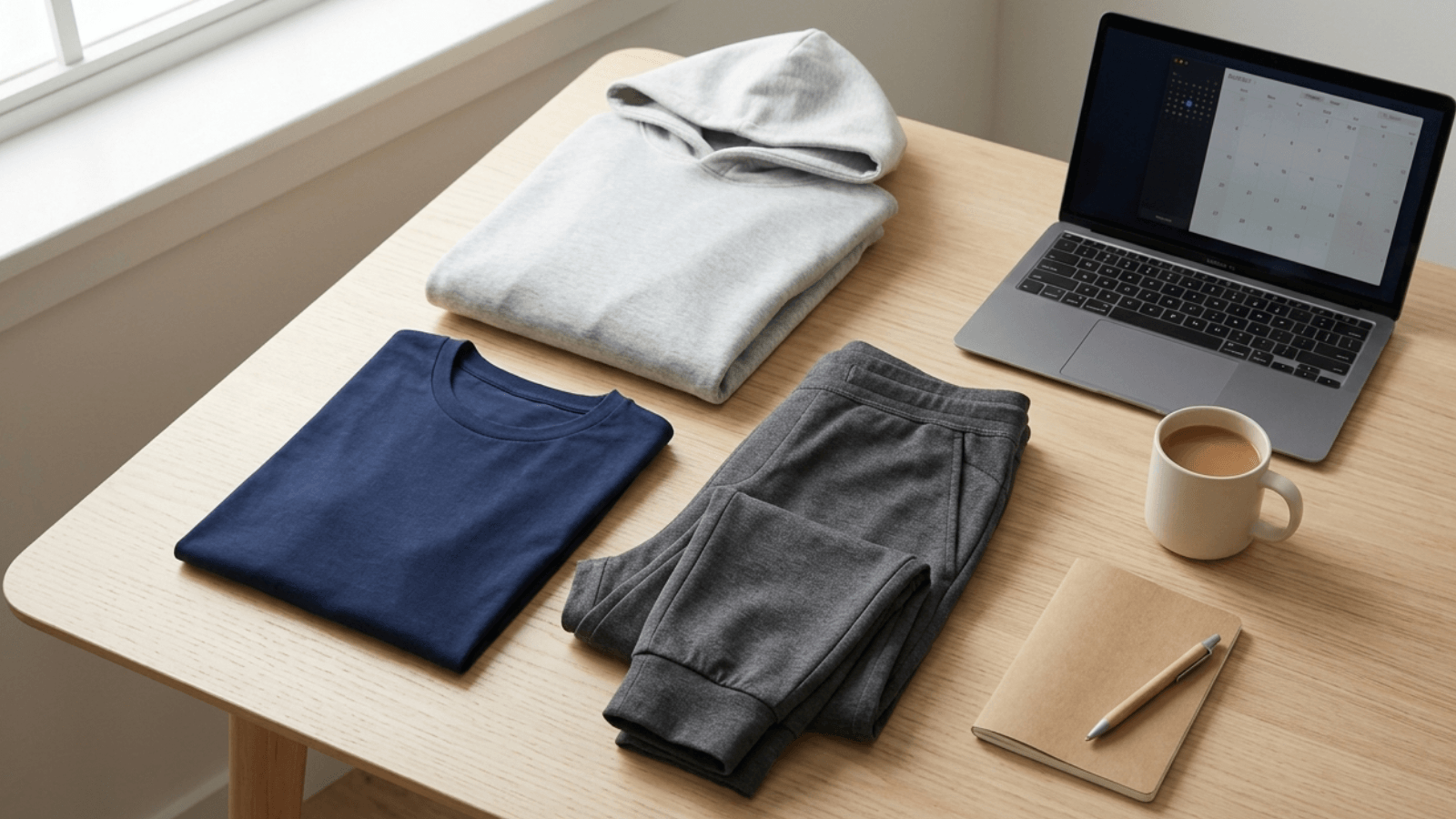
Working from home changes more than your commute. It changes how you dress, when you dress, and whether you bother changing out of pajamas at all on some mornings. If you are building a wardrobe specifically for home workdays, the goal is not to pick between comfort and looking presentable. It is to find pieces that quietly do both, so you are not scrambling before a surprise video call or feeling sloppy by three in the afternoon.
Research on remote work attire backs this up. A study covered by Fast Company found that people who dressed with intention on home workdays reported higher authenticity and engagement through the day compared to those who stayed in pure loungewear. The point is not that you need office formalwear at your desk. It is that deliberate choices, rather than whatever is closest to the bed, make the actual difference.
Most people default to two extremes when they start working from home. They either treat every day like a holiday and live in whatever is closest to the bed, or they overcorrect and try to dress exactly like they would for the office, which quickly feels exhausting when there is no commute to justify it. A proper WFH wardrobe sits between these two extremes, built around pieces that feel like loungewear but photograph like effort.
Why a WFH Wardrobe Needs Its Own Rules
An office wardrobe is built around one long block of time away from home, so the clothes only have to survive a commute and a full day at a desk. A work-from-home wardrobe is different. It has to move between a desk chair, a kitchen counter, a video call, and sometimes a quick errand, often within the same hour. That means the fabric has to breathe, the fit has to allow you to sit for long stretches without pulling or riding up, and the overall look has to hold up on camera without needing an iron every morning.
The simplest way to plan this out is to think in layers and building blocks rather than full outfits. Once you have three or four dependable pieces in each category, mixing and matching becomes automatic instead of a daily decision. This also means fewer laundry cycles, since a small rotation of reliable pieces gets worn more evenly than a large wardrobe where half the shelf never gets touched.
Fit matters just as much as fabric here. Clothes that are too tight get uncomfortable after two hours in a chair, while clothes that are too loose look careless the moment you stand up for a call. A relaxed but not baggy fit is the sweet spot for almost every piece in a home office rotation, since it moves with you through a full day of sitting, standing, and stepping away for a quick break.
Start With a Base Layer of T-Shirts That Work Twice
Your base layer is doing the most work in a WFH wardrobe because it is what shows up on every call. A round neck t-shirt in a solid colour is the safest daily pick since it reads as neat without looking like you tried too hard. Keep two or three in muted tones like navy, olive, or charcoal, since these hold up well on camera and do not wash out under indoor lighting the way very pale shades sometimes do.
For days when you have back-to-back calls or a client meeting squeezed into the afternoon, a polo t-shirt adds just enough structure to look intentional without needing a shirt and blazer. It is still soft cotton, still comfortable enough for a full day at your desk, but the collar changes the tone of the whole outfit instantly.
Choose Bottoms You Would Never Wear Outdoors On Purpose
Nobody sees your bottoms on a video call, which is exactly why this category gets neglected first. That is a mistake, because comfortable bottoms are often the reason people stop bothering to get dressed at all. A good pair of joggers solves this. Look for a mid-weight cotton blend rather than a heavy fleece, since Indian home offices rarely need that much insulation and a lighter fabric keeps you from overheating by midday.
Keep the fit tapered rather than baggy. A jogger that is too loose bunches up under a desk and looks careless if you do stand up on camera or step out for a delivery. A slightly tapered fit looks considered even though it is still built for comfort.
Keep One Layering Piece Within Reach
Air-conditioned rooms, early morning calls, and the odd rainy afternoon all call for a layer you can pull on and off quickly. A hoodie works well for this because it is easy to throw on between calls, but keep it on the lighter side so it does not feel like sportswear when you are on camera. A sweatshirt is a slightly more polished alternative if you want something with a cleaner finish for calls where you are on screen for longer.
The trick with layering pieces is restraint. One or two solid colours that match everything in your rotation will always look better than five statement pieces that only pair with one specific t-shirt.
Dress for the Camera, Not Just the Chair
Video calls compress your outfit into a small rectangle, and busy prints or clashing patterns tend to look noisier on screen than they do in person. A plain t-shirt in a solid colour is almost always the safer choice for anything client-facing, while printed or graphic pieces are better saved for days when you know you are off camera.
|
Occasion |
What Works Best |
Why It Works |
|
Solo desk work, no calls |
Oversized tee, joggers |
Maximum comfort, nothing to adjust |
|
Internal team call |
Round neck tee, joggers |
Neat on camera, still relaxed below frame |
|
Client call or interview |
Polo tee, chinos or tapered joggers |
Adds structure without full formalwear |
Build a Simple Rotation So You Stop Deciding Every Morning
Decision fatigue is real, and a WFH wardrobe should reduce the number of choices you make before 9 AM, not add to them. A basic five day rotation built from the pieces above means you always have something ready without digging through a drawer.
|
Day |
Top |
Bottom |
|
Monday |
Round neck tee |
Joggers |
|
Tuesday |
Polo tee |
Tapered joggers |
|
Wednesday |
Plain tee |
Joggers |
|
Thursday |
Round neck tee |
Shorts, if no calls |
|
Friday |
Sweatshirt or hoodie layer |
Joggers |
Adjust the rotation around your actual call schedule for the week rather than following it rigidly. The structure is meant to save time, not add another rule to follow.
Adjust the Rotation With the Season
A wardrobe built in peak summer will not survive monsoon comfortably, and the reverse is also true. Through the hottest months, lean toward lighter cotton tees and shorts for the hours you are off camera, saving joggers for calls or cooler mornings. Once the rains set in, a light hoodie or sweatshirt becomes far more useful, not for warmth but for staying comfortable in rooms where the air conditioning runs a little too cold against the damp weather outside.
Keeping one or two pieces from each weight category on hand, rather than switching your whole wardrobe every few months, makes it easier to adjust day to day instead of overhauling everything each season.
Small Habits That Keep the Wardrobe Working
Wash solid colours separately for the first few cycles so they hold their tone longer, and avoid tumble drying cotton tees on high heat since it shortens the life of the fabric faster than almost anything else. Rotating between three or four t-shirts rather than wearing the same one repeatedly also means each piece lasts longer before the collar or hem starts to show wear.
It also helps to keep one relaxed, oversized tee aside purely for off-camera days. Having a piece that is unapologetically comfortable, kept separate from your on-camera rotation, removes the temptation to wear your neater pieces into the ground and keeps them looking sharp for the days that actually need them.
A work-from-home wardrobe does not need to be large. It needs to be dependable enough that getting dressed stops being a decision and starts being a habit, one that happens to leave you looking ready for whatever the day throws at your calendar.